Ski Accident Abroad: Repatriation and Care
What usually happens after a ski accident
Most ski accidents involve a fall, a collision or an injury to the knee, the shoulder, the wrist, the head or the spine. After the accident, the sequence is generally the same: first aid from the ski patrol, transport down the slope, a first hospital, then the question of the way home.
1. On the slope: the mountain rescue
The ski patrol assesses the injured person and moves him or her to the base or to the nearest medical center, by sled, by ambulance or, for serious injuries, by helicopter. Ask for the name of the rescue service and the receipt: in many countries, mountain rescue is charged and is not always covered by the public health system. Your travel insurance, or the insurance included with the ski pass, may cover it, so keep every document.
2. At the hospital
The first hospital treats the emergency: examination, imaging, plaster or surgery if necessary. Ask for the medical report, the imaging on disc and the list of treatments. If the injury is serious or complex, the hospital may transfer the patient to a larger center.
3. Call the insurer early
Call the assistance company of your travel insurance, bank card or ski-pass insurance as soon as possible, before committing to expenses. The assistance company's doctors will talk to the treating physician and decide with the team whether and how to bring the patient home. See who decides on a medical repatriation and which documents to prepare.
4. Which transport to go home?
The choice depends on the injury, the distance and the patient's condition:
- a ground ambulance, when the home or the destination hospital is not too far;
- a commercial flight, possibly with a seat arrangement or an escort, when the patient is stable and able to sit;
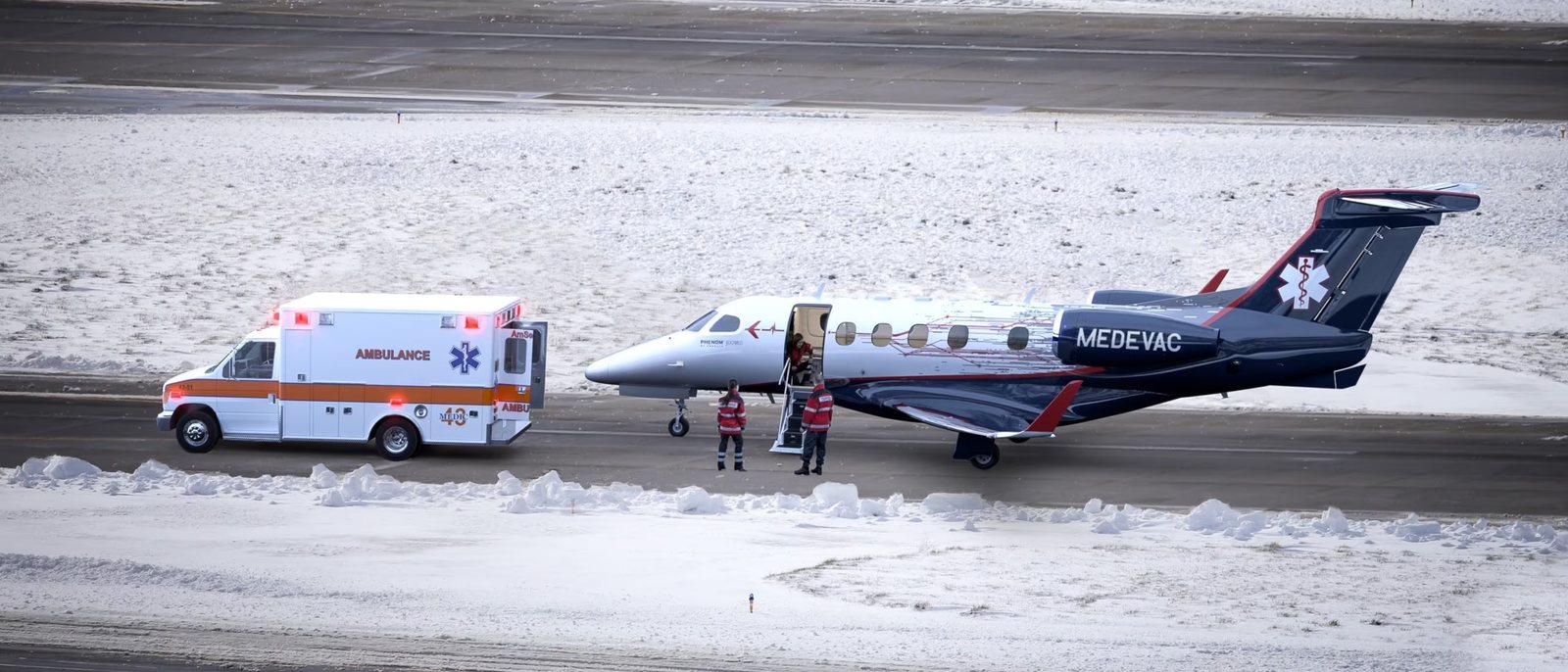
- an air ambulance, when the patient must remain lying down, needs monitoring or care in flight, or when a long journey would be harmful. This is often the case for spinal injuries, a severe head injury, multiple fractures or after an operation.
For the difference between the two last options, read air ambulance or commercial flight with medical escort.
Fractures and flying
A limb in a plaster cast can swell during a flight, and a leg that cannot move for a long time increases the risk of blood clots. The treating physician, and the airline's medical service for a commercial flight, will say whether the patient can fly, when, and in which conditions. Do not decide alone: ask for a written opinion on fitness to travel.
Specific cases
- Head or spinal injury: the patient is generally transported lying down, with monitoring, and the transfer is planned with the medical team.
- Operation abroad: the timing of the return depends on the surgeon's opinion and on the healing.
- Several people in the group: relatives travelling with the patient may need to rebook flights; ask your insurer.
Before the next winter
- Check that your insurance covers off-piste skiing, mountain rescue and repatriation, and the sports you plan to do.
- Keep the assistance phone number on your phone and on the ski pass.
- Carry your identity documents and health insurance card.
How we can help
If you have to bring an injured skier home, call us at any hour. Our coordinating physician reads the medical file, gives an opinion on the transport best adapted to the injury, and organizes the transfer with the hospital and the insurer. The final decision always remains with the treating physicians.
In short
- Keep every receipt, starting with the mountain rescue.
- Get the medical report, the imaging and an opinion on fitness to travel.
- Call the assistance company before committing to expenses.
- The transport depends on the injury: ground ambulance, commercial flight or air ambulance.
To go further, read whether your travel insurance covers an air ambulance and what to do after a scooter accident abroad.
General information only — not personalized medical, legal or insurance advice. Your insurance contract and the treating physician's opinion prevail in your situation.
A medical situation abroad can't wait.
Our coordinators are available right now — every day, at any hour.