Medical Evacuation From a Crisis Zone: How Is It Organized?
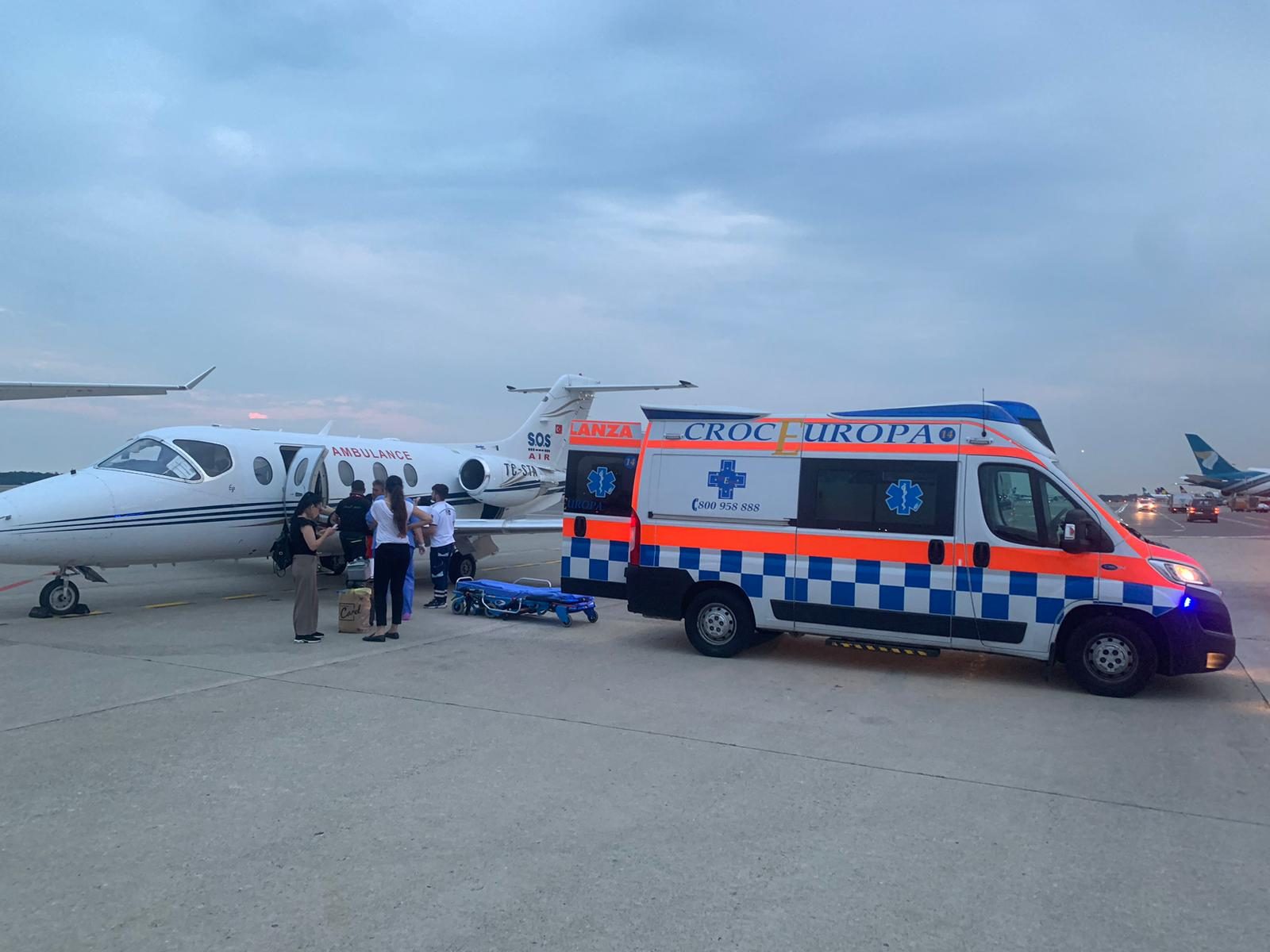
When a crisis breaks out, for example a conflict, a natural disaster or a political unrest, a patient or an injured person may need to be evacuated for medical reasons while normal travel options have disappeared. This article explains in general terms how such a medical evacuation is approached, and above all what it cannot promise. It concerns the transport of patients, not security evacuations of populations, which are handled by the authorities.
Medical evacuation and security evacuation: two different things
A medical evacuation is the transport of a patient who needs care that is not available locally, under medical supervision. A security evacuation is the departure of people from a dangerous area, organized by governments, embassies or specialized providers. The two can overlap, but they do not have the same rules, the same actors or the same priorities. We coordinate medical evacuations.
The first question: is it possible and safe?
Before any flight is considered, several points must be checked, and they can change from one hour to the next:
- The airspace and the airports. Are they open? Can an aircraft land and take off safely, and can it be refueled?
- The clearances. Landing and overflight permits depend on the authorities, which may be unavailable or may refuse.
- The ground transfer. Can the patient be moved safely from the hospital to the airport, and can the ambulance cross the area?
- The state of the patient. The medical team decides whether the patient can travel and which team and equipment are needed.
- The safety of the crew. The crew and the medical team never take a risk that the operators consider unacceptable.
The role of the different actors
- The treating hospital gives the medical information and the opinion on the transfer.
- The assistance company or the employer opens the file and decides on the financial side.
- The authorities and the embassies often control access to airports and can provide information and, sometimes, support.
- Local partners help with the ground logistics, when they are available.
- Our coordinating physician and operations team assess the file, the feasibility and the options, and coordinate the transfer.
What this means in practice
- Timing is uncertain. A mission can be delayed or cancelled by an event outside everyone's control, such as the closure of an airport.
- Several options are prepared in parallel. For example, a transfer by road to a neighboring country, then a flight from a safe airport.
- Information changes quickly. A reliable contact on site, and a clear point of contact for the family or the employer, are essential.
- No promise can be made in advance. We tell you clearly what is feasible, and what is not.
What employers and insurers can prepare
- Check in the contract whether medical evacuation from an area at risk is covered, and under which conditions, since many contracts exclude conflict zones or events such as war.
- Keep up to date the list of employees abroad, their location and their medical needs, with their consent.
- Know the contact of the assistance company and of the embassy, and keep a procedure for crisis.
- Prepare the medical file of the patient. See what makes a medical evacuation file well prepared.
How we can help
We assess the situation with the treating physicians and the other actors, and we tell you what is possible. We never organize a flight that the medical teams or the operators consider unsafe. See our page for insurers and assistance companies and read the employer's role in the evacuation of an expatriate employee.
In short
- A medical evacuation is not a security evacuation: the actors and the rules differ.
- Feasibility depends on the airspace, the airports, the clearances, the ground transfer and the patient's condition.
- Timing is uncertain and no promise can be made in advance.
- Preparation, meaning the contract, the medical file and the contacts, makes the difference.
General information only — not personalized medical, legal or insurance advice. Your insurance contract and the treating physician's opinion prevail in your situation.
A medical situation abroad can't wait.
Our coordinators are available right now — every day, at any hour.