Illness on a Cruise: Evacuation and Repatriation
When someone falls ill on board
A cruise is a floating hotel with a few days between ports. When a passenger falls ill, the question is how fast and where the person can be treated. The answer depends on the ship's medical facilities, on the condition of the patient and on the distance to the next port.
The ship's medical center
Most cruise ships have a medical center with a doctor and a nurse. It is equipped for common illnesses and emergencies, for stabilizing a patient and for a limited period of monitoring, but it is not a hospital. For a serious condition, such as a heart attack, a stroke, a severe injury or a complicated pregnancy, the objective is to stabilize the patient and to reach a hospital ashore. Consultations at the medical center are generally charged to the passenger, and travel insurance may cover them.
Evacuation from the ship
There are two main ways to get a patient ashore:
- Disembarkation at the next port, when the condition allows it. The ship contacts a local hospital and an ambulance waits on the quay.
- Medical evacuation by helicopter or by boat, when the ship is within reach of the coast and the condition is urgent. It is decided by the ship's doctor and the captain, with the coast guard or the local rescue center, and depends on the weather and the distance.
In the open sea, far from the coast, a medical evacuation may be impossible for some time. The ship may then change course to reach a port sooner.
After the disembarkation
The patient is treated at a hospital in a country that may not be the one of the departure port, in a language that may not be understood. The cruise line does not continue to look after the patient once he or she has left the ship, and the cruise itself generally continues without the patient. This is why the passenger and the relatives must act quickly:
- call the assistance company of the travel insurance or bank card as soon as possible;
- ask the ship's doctor for a medical report before disembarking;
- make sure that the passport, the luggage and the medication of the patient follow, and ask the cruise line how;
- keep every invoice and the name of every person you speak to.
Getting home
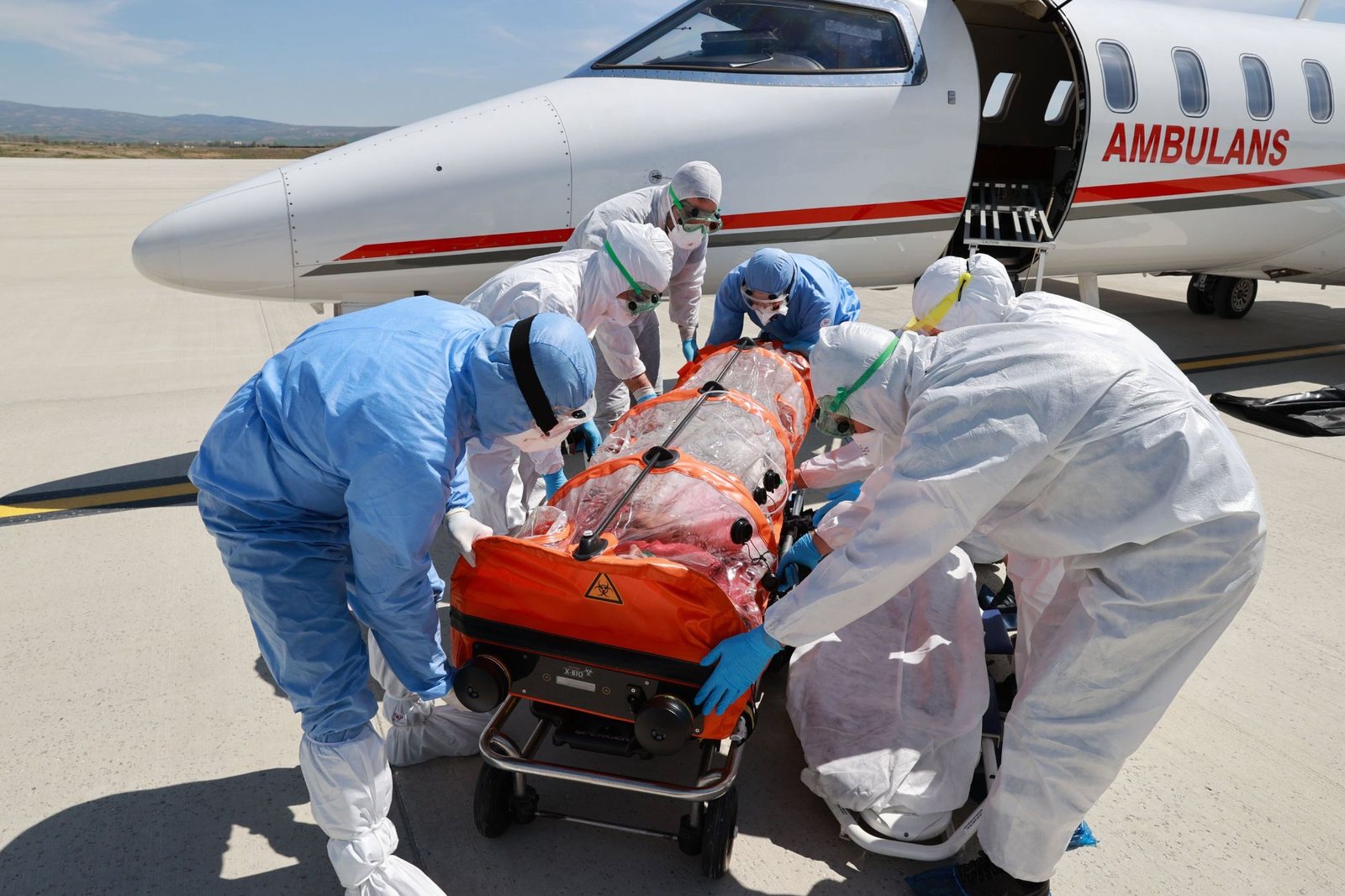
When the patient is stable enough to travel, the assistance company, the treating hospital and the medical team decide on the way home: a ground ambulance, a commercial flight with or without an escort, or an air ambulance. See who decides on a medical repatriation and the difference between an air ambulance and a commercial flight with escort. For a patient who must remain lying down or who needs monitoring, an air ambulance is generally preferred.
Before you leave
- Check that your travel insurance covers medical care on board and ashore, evacuation and repatriation, and for which age and pre-existing conditions.
- Carry your treatments in the cabin luggage, with the prescriptions.
- Note the assistance phone number and the contact of the ship's medical center.
- Tell the medical center about any chronic illness when you board, if it is relevant.
How we can help
If a relative has fallen ill on a cruise and you must bring the person home, call us. Our team is available 24/7. Our coordinating physician reads the file from the ship's doctor and the hospital ashore, gives an opinion on the most suitable transport and organizes the transfer with the insurer. The final decision always remains with the treating physicians.
In short
- The ship's medical center stabilizes the patient; a serious condition needs a hospital ashore.
- The patient is either disembarked at the next port or evacuated by helicopter or boat.
- Call the assistance company early and get a medical report before disembarking.
- The way home depends on the patient's condition.
To go further, read what to do when a relative is hospitalized abroad and whether your travel insurance covers an air ambulance.
General information only — not personalized medical, legal or insurance advice. Your insurance contract and the treating physician's opinion prevail in your situation.
A medical situation abroad can't wait.
Our coordinators are available right now — every day, at any hour.