How Long Does It Take to Organize a Medical Repatriation?
There is no single answer
Families often ask how fast a medical repatriation can happen. The honest answer is that it depends on the patient's condition, the urgency and several practical factors. For an urgent evacuation, the organization can start immediately and is generally measured in hours. For a planned repatriation of a stable patient, it is generally measured in days. Each case is different, and we give a realistic estimate as soon as we have the medical file.
What determines the timeline
- The patient's stability and fitness to fly: the treating physicians and our coordinating physician must agree that the patient can travel. This is the first condition, and it cannot be rushed.
- The urgency: an emergency evacuation and a planned repatriation do not follow the same rhythm.
- Aircraft and crew availability: the choice of aircraft depends on the distance and the patient's condition, and its position at the time of the request matters.
- Flight clearances: overflight and landing permits, and customs coordination for the medical equipment on board, vary by country.
- Coordination between hospitals and the insurer: discharge from the sending hospital, acceptance by the receiving hospital and, where relevant, the insurer's authorization.
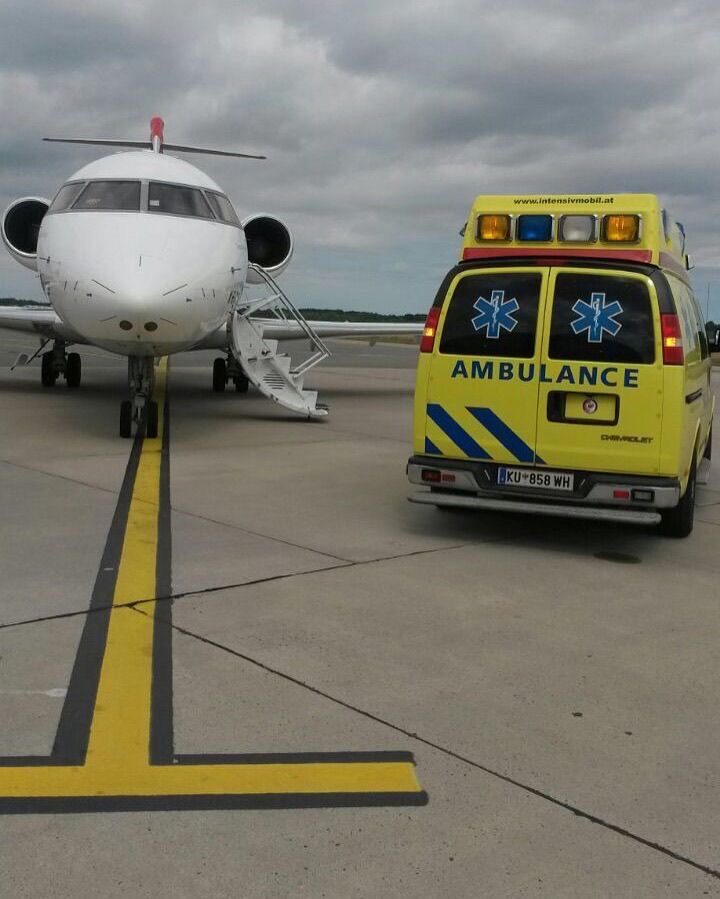
- Ground transfers: an ambulance is organized at both ends, from the bed to the aircraft and from the aircraft to the bed.
The main steps
- First call: we gather the essential information and open the case.
- Medical assessment: our coordinating physician collects the file from the local team and assesses the patient's fitness to fly.
- Choice of transport and quote: air ambulance, commercial flight with medical escort or ground transfer, with a written quote before departure.
- Preparation: aircraft, medical crew, clearances and ground transfers are arranged in parallel.
- The flight and the handover: the patient is taken from bed to bed, with a complete handover to the receiving team.
What a family can do to save time
- Have the patient's identity document and the insurance policy number at hand.
- Give us the contact details of the assistance company, if there is one.
- Ask the hospital for the medical reports and recent examination results.
- Designate a single contact person in the family, reachable at any hour.
- Tell us right away about any special need: oxygen, a relative traveling with the patient, a chosen receiving hospital.
What can slow things down
- A patient who is not yet stable enough to travel.
- Missing documents or an incomplete medical file.
- An insurer's authorization still pending.
- Clearances that take longer in some countries.
- Weather or airport constraints on the day.
To see how a mission unfolds in more detail, read how an air ambulance mission works. You can also read whether your travel insurance covers an air ambulance and the difference between an air ambulance and a commercial flight with medical escort.
General information only — not personalized medical, legal or insurance advice. Your insurance contract and the treating physician's opinion prevail in your situation.
A medical situation abroad can't wait.
Our coordinators are available right now — every day, at any hour.