Medical Repatriation between the United States and France
An accident or medical emergency during a trip or a stay in the United States, or the need to continue treatment in France: we organize the medical transport end to end.
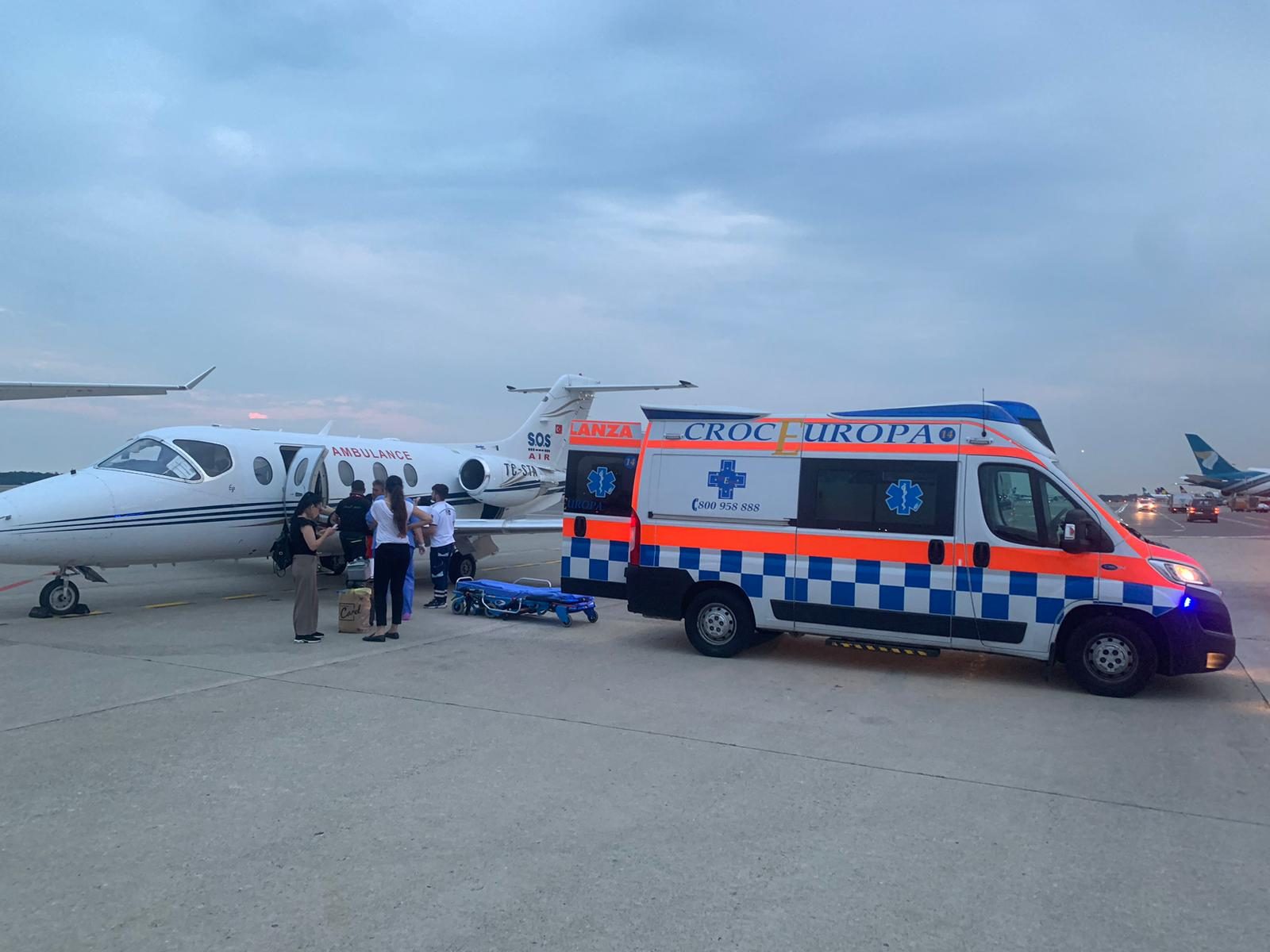
The United States welcomes a large number of French travelers, students, professionals and expatriates. Because the cost of hospital care can be very high, many patients — and their insurers — prefer to organize a repatriation to France once the condition is stable enough. Repatriations follow accidents, acute illnesses or the need to continue care close to family.
Our coordinating physician assesses each case together with the on-site medical team to determine the equipment required and the transport mode best suited to the patient's condition.
Common situations on this route
- Accident or acute illness during a trip, a business assignment or a stay as a student or expatriate
- Hospital stay for which the patient wants to continue treatment in France
- Transfer of a stabilized patient to a French hospital with the required specialty
- Repatriation of a body after a death in the United States
Airports served
On the United States side
- New York – JFK and Teterboro (TEB)
- Miami (MIA)
- Los Angeles (LAX)
- Washington – Dulles (IAD)
On the France side
- Paris – Charles de Gaulle & Orly
Formalities & coordination
A repatriation from the United States involves entry and landing clearances for a foreign air ambulance, coordination with the treating hospital and its discharge procedure, and coordination with the patient's insurer. The transatlantic routing and the crew duty time are planned before departure.
Our team can work directly with the patient's insurer or assistance company to arrange fast coverage — see our dedicated page for insurers and assistance companies.
Customs and consular formalities vary case by case and change over time. Our team confirms the exact documents required from the first contact.
Related services
Common questions about this route
Yes. We coordinate with the US treating team and its discharge procedure, assess the patient's fitness to fly, and organize a long-range air ambulance with the medical crew suited to the case, in coordination with the patient's insurer.
Given the long distance, a long-range jet is generally required, with a technical stop depending on the aircraft and the route — our coordinating physician determines the most suitable aircraft and the medical equipment on board.
A medical situation abroad can't wait.
Our coordinators are available right now — every day, at any hour.