Spinal or Head Injury Abroad: Air Ambulance Repatriation
A spinal cord or head injury during a trip abroad requires great care when the patient is moved. We organize the transfer with immobilization equipment and a crew trained for these cases.
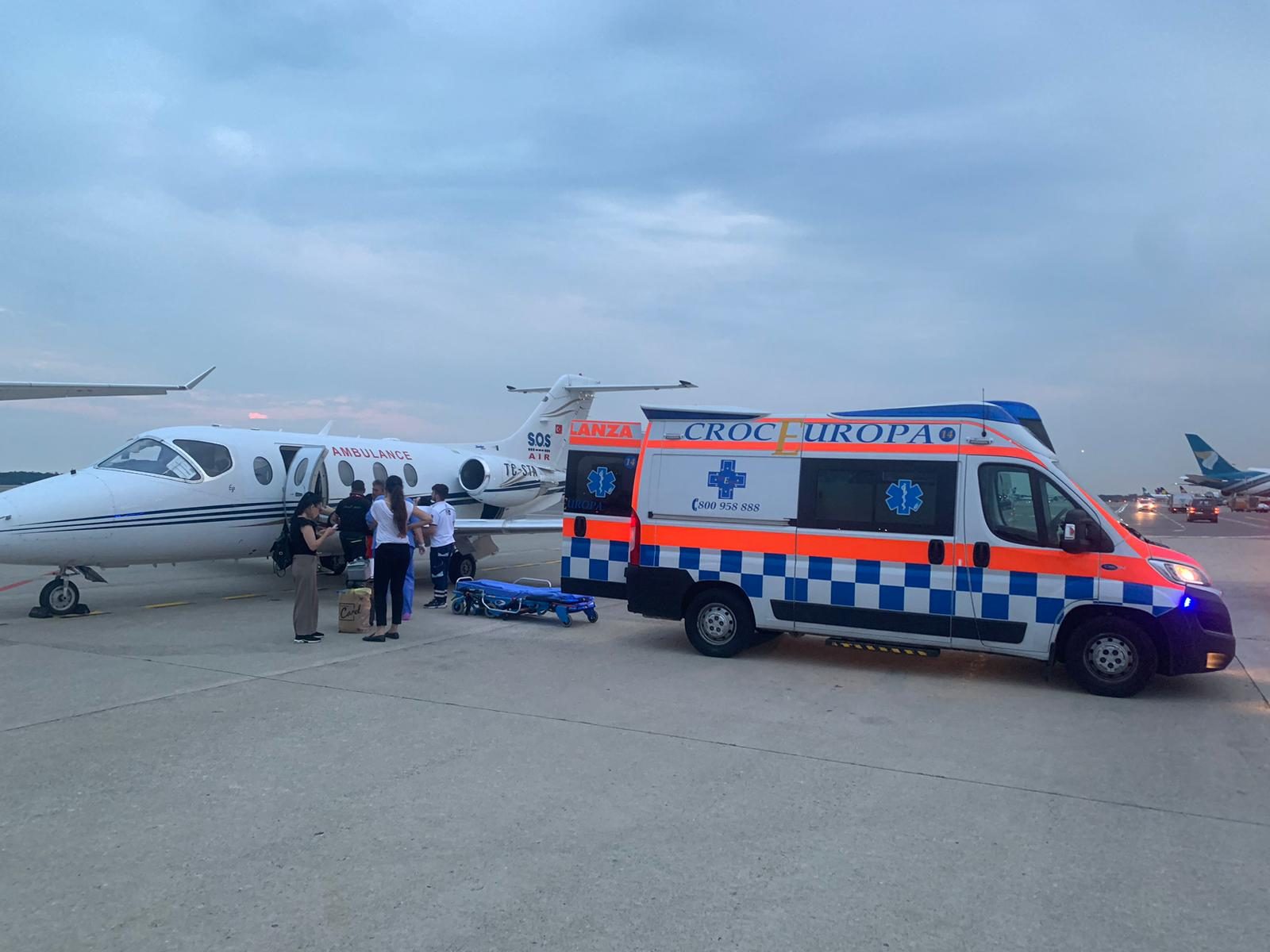
After an accident, a fall or a diving incident, a patient may have a spinal or head injury that calls for a specialized neurosurgery or rehabilitation unit, often closer to home. We coordinate with the treating team and the receiving unit, and organize the transfer with the immobilization equipment, monitoring and, when relevant, cabin pressure management that the case requires.
Our coordinating physician assesses each case together with the on-site medical team to determine the equipment required and the transport mode best suited to the patient's condition.
When we are called in
- Spinal injury after a fall, a road accident or a sports or diving accident abroad
- Head injury requiring neurosurgical or neuro-intensive care in the home country
- Transfer to a specialized rehabilitation center after the acute phase
- Patient who needs to remain strictly immobilized during the transfer
How the transport is organized
Before the flight
- Collection of imaging, operative reports and the current neurological status
- Assessment of fitness to fly by our coordinating physician with the treating team
- Coordination with the receiving neurosurgical or rehabilitation unit
- Careful transfer on a stretcher, with immobilization maintained
On board
- Intensive-care or neuro-experienced medical crew, depending on the case
- Immobilization equipment such as a vacuum mattress, kept in place throughout
- Continuous monitoring, oxygen and ventilation equipment if needed
- Cabin pressure managed according to the injury — see our sea-level cabin option
Fitness to fly and timing
When and how to move a patient with a spinal or head injury is decided by the treating specialists. Our coordinating physician works with them and with the receiving unit, and organizes the flight once they confirm that the transfer is appropriate.
Our team can work directly with the patient's insurer or assistance company to arrange fast coverage — see our dedicated page for insurers and assistance companies.
This page gives general information about how a medical transport is organized and is not medical advice. Every decision is taken by the treating physicians together with our coordinating physician, case by case.
Related services
Common questions
Yes, when the treating team and the receiving unit agree. The patient stays immobilized during the whole transfer, with a crew trained for these cases.
For some conditions it can. We can arrange a flight with the cabin pressurized at or near sea level, when it is medically useful.
Whenever the aircraft and the medical situation allow it, a relative can usually accompany the patient. We organize their travel.
A medical situation abroad can't wait.
Our coordinators are available right now — every day, at any hour.