Contagious Disease Abroad: Isolation Transfer by Air Ambulance
When a patient has a contagious disease or a resistant germ, the transfer is organized with isolation equipment and procedures, in agreement with the hospitals involved.
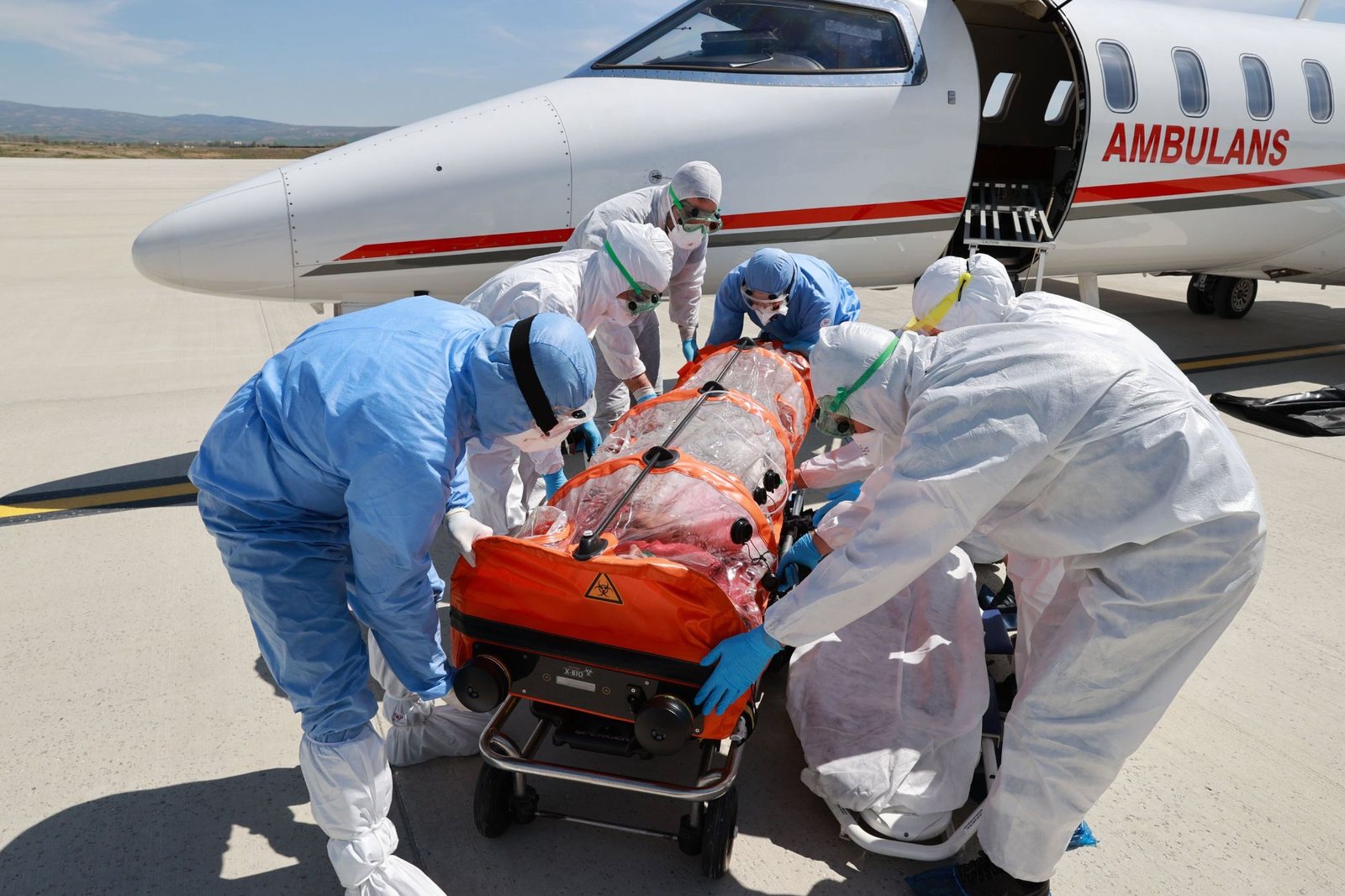
A patient with a contagious disease, or carrying a germ that is resistant to antibiotics, can still be transferred in some cases, under strict conditions. The infection status is one of the first things we ask for, because it determines the aircraft, the equipment and the procedures. Our coordinating physician works with the treating team, with the hospital hygiene or infectious-disease team and with the receiving hospital, which must agree before the flight.
Our coordinating physician assesses each case together with the on-site medical team to determine the equipment required and the transport mode best suited to the patient's condition.
When we are called in
- Patient with a contagious disease needing a transfer to a specialized unit
- Patient carrying a multi-resistant germ, to be transferred to another hospital
- Return home after an infection acquired during a trip
- Transfer that requires an isolation stretcher and specific procedures
How the transport is organized
Before the flight
- Precise information on the disease, the germ and the contagiousness, from the treating team
- Agreement of the receiving hospital and of its infection-control team
- Choice of the aircraft and preparation of the isolation equipment and of the cabin
- Briefing of the crew and the ground teams on the procedures to follow
On board
- Isolation stretcher or equivalent protection, according to the case
- Medical team trained in isolation procedures and in the use of protective equipment
- Monitoring, oxygen and, if needed, intensive-care equipment
- Decontamination of the aircraft after the mission, according to the applicable protocols
Fitness to fly and timing
The decision to transfer depends on the disease, on the patient's condition and on the agreement of the receiving hospital, which can take time to obtain. Our coordinating physician manages these exchanges in parallel with the preparation of the flight. Some diseases cannot be transported by air: in this case we say so clearly.
Our team can work directly with the patient's insurer or assistance company to arrange fast coverage — see our dedicated page for insurers and assistance companies.
This page gives general information about how a medical transport is organized and is not medical advice. Every decision is taken by the treating physicians together with our coordinating physician, case by case.
Related services
Common questions
In some cases, yes, with isolation equipment and procedures, and with the agreement of the receiving hospital. Some diseases and situations do not allow a transfer.
The crew, the ground teams and the receiving hospital. The procedures are defined with the treating team and with the infection-control team, case by case.
Yes. The receiving hospital and its infection-control team must accept the patient and the conditions of the transfer before the flight is confirmed.
A medical situation abroad can't wait.
Our coordinators are available right now — every day, at any hour.